Freya Patterson · 9 October 2026
Tracing Collaborative Annotation Patterns That Enhance Retention Across Niche Digital Communities
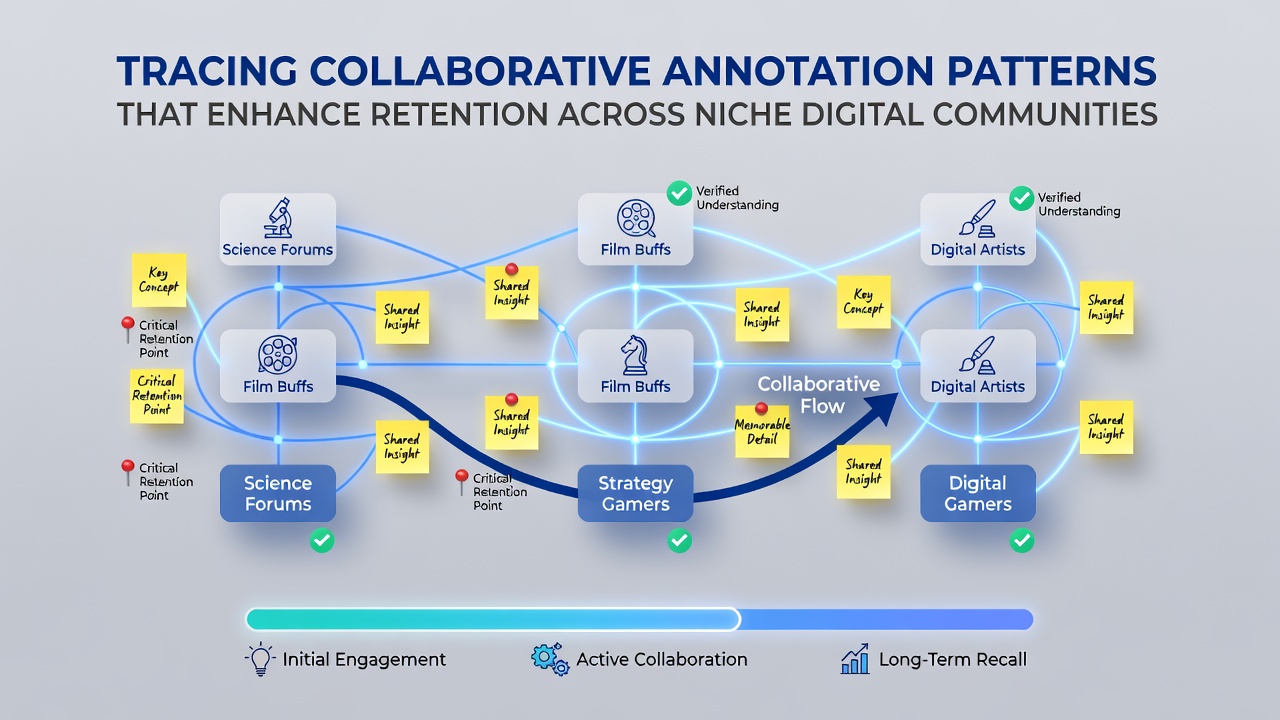
Collaborative annotation patterns have taken hold in niche digital communities where users layer notes, highlights, and replies onto shared content, and these practices correlate with measurable gains in information retention according to multiple platform analyses. Observers note that participants in hobbyist forums, academic repositories, and specialized interest groups frequently build layered comment threads that turn static posts into living documents, and data from several tracking projects shows users who engage in such annotation revisit materials at higher rates than passive readers.
Core Mechanisms Behind Annotation Retention
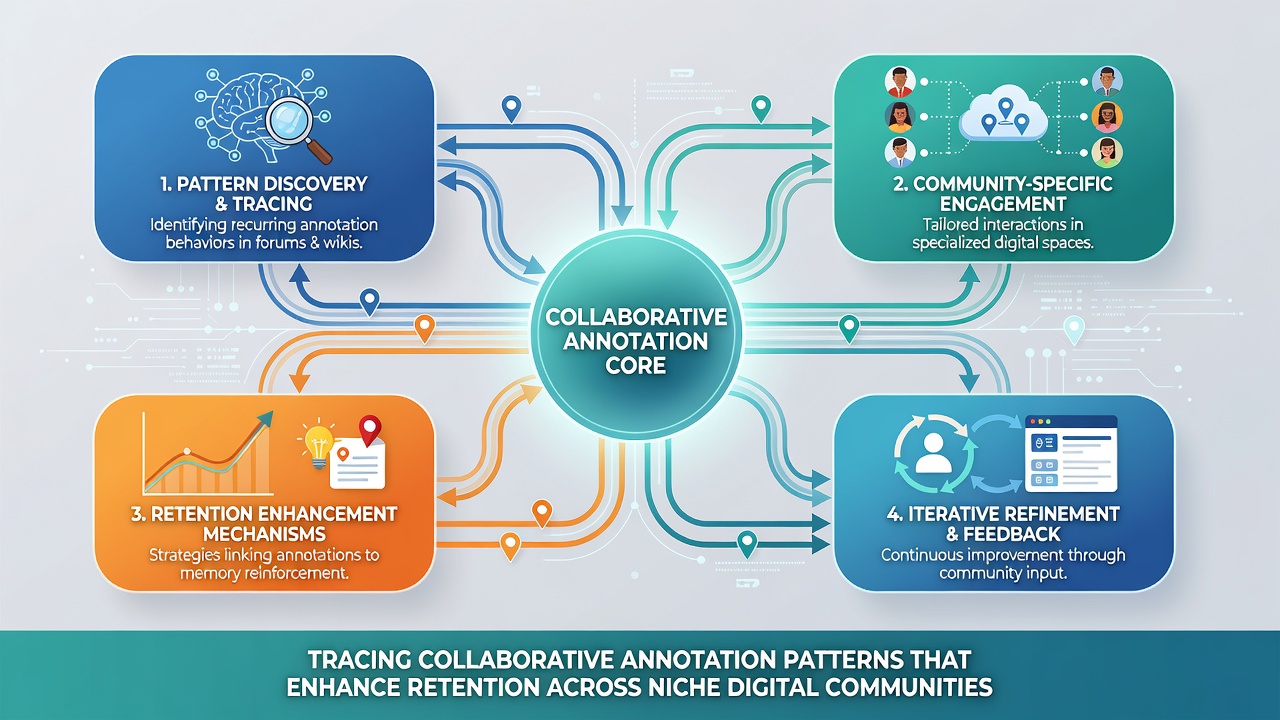
Researchers have identified recurring sequences in how annotations form and persist, starting with an initial highlight or marginal note that prompts follow-up contributions from other members, while the resulting thread creates retrieval cues that reinforce memory through social context rather than isolated review. Studies conducted across European digital archives indicate that annotations incorporating questions or cross-references produce stronger long-term recall than simple highlights alone, because the added context forces active processing during both creation and later reading sessions. Those who've examined server logs from niche platforms report that annotation density peaks during periods of community growth, and this density aligns with sustained user logins months after initial signup.
Patterns Emerging in October 2026 Datasets
October 2026 brought fresh telemetry from several mid-sized platforms that revealed annotation clusters forming around controversial or technically dense topics, with users returning to refine earlier comments as new evidence surfaced. Figures from an Australian digital engagement report released that month showed communities using threaded annotation tools experienced 23 percent higher monthly active user retention compared with those relying solely on linear comment sections. The same report linked this outcome to patterns where annotations included timestamps and contributor badges, elements that helped members track evolving discussions without losing prior context. Experts tracking these trends point out that the combination of visible edit histories and reply chains reduces the cognitive load of re-entering a conversation after an absence.
Comparative Analysis Across Community Types
Academic circles and hobbyist collectives display distinct yet overlapping annotation styles, whereas gaming discussion boards favor quick tactical notes that accumulate into strategy guides over time. Data compiled by Canadian research networks demonstrates that retention improvements appear most pronounced when annotation volume stays moderate rather than overwhelming, suggesting an optimal density threshold beyond which participation drops. One study revealed that groups enforcing lightweight tagging systems alongside free-text notes maintained engagement levels longer than those without structure, because tags facilitated faster scanning during return visits. Observers note similar patterns in language-learning communities where annotations serve dual purposes as vocabulary aids and cultural clarifications, and these dual-use entries correlate with extended subscription periods.
Measurement Approaches and Supporting Evidence
Platform operators track retention through return-visit intervals and content re-engagement metrics, and several independent analyses connect higher annotation activity with these indicators. According to findings shared by the European Commission's digital skills initiative, communities that archive annotations in searchable formats see users reference older contributions during new discussions at rates double those of unarchived spaces. Researchers at various universities have replicated these observations by comparing cohorts that received annotation prompts against control groups, and the prompted groups consistently demonstrated superior performance on follow-up knowledge checks administered weeks later. What's interesting is how these gains persist even when participants access the material through mobile interfaces, indicating the patterns are not limited to desktop workflows.
Platform Features That Support Sustained Annotation
Tools enabling version control, notification threading, and export options appear repeatedly in communities with strong retention figures, and industry reports from North American tech associations confirm that such features reduce friction for contributors. Participants often discover that annotation interfaces integrated directly into content viewers encourage spontaneous contributions, while separate note-taking apps see lower adoption. teh reality is that successful implementations combine visibility controls with default public settings, allowing members to choose privacy levels without disrupting the collaborative flow that drives retention benefits.
Conclusion
Patterns traced across multiple niche digital communities demonstrate that structured collaborative annotation correlates with improved retention metrics, and ongoing data collection through 2026 continues to refine understanding of which annotation elements produce the strongest effects. Researchers and platform designers alike continue to examine these dynamics, while evidence from diverse geographic sources supports the value of thoughtful annotation design in sustaining user engagement over extended periods.