Zara Klein · 25 September 2026
How Metadata Strategies Shape Discovery Pathways on Specialized Content Platforms
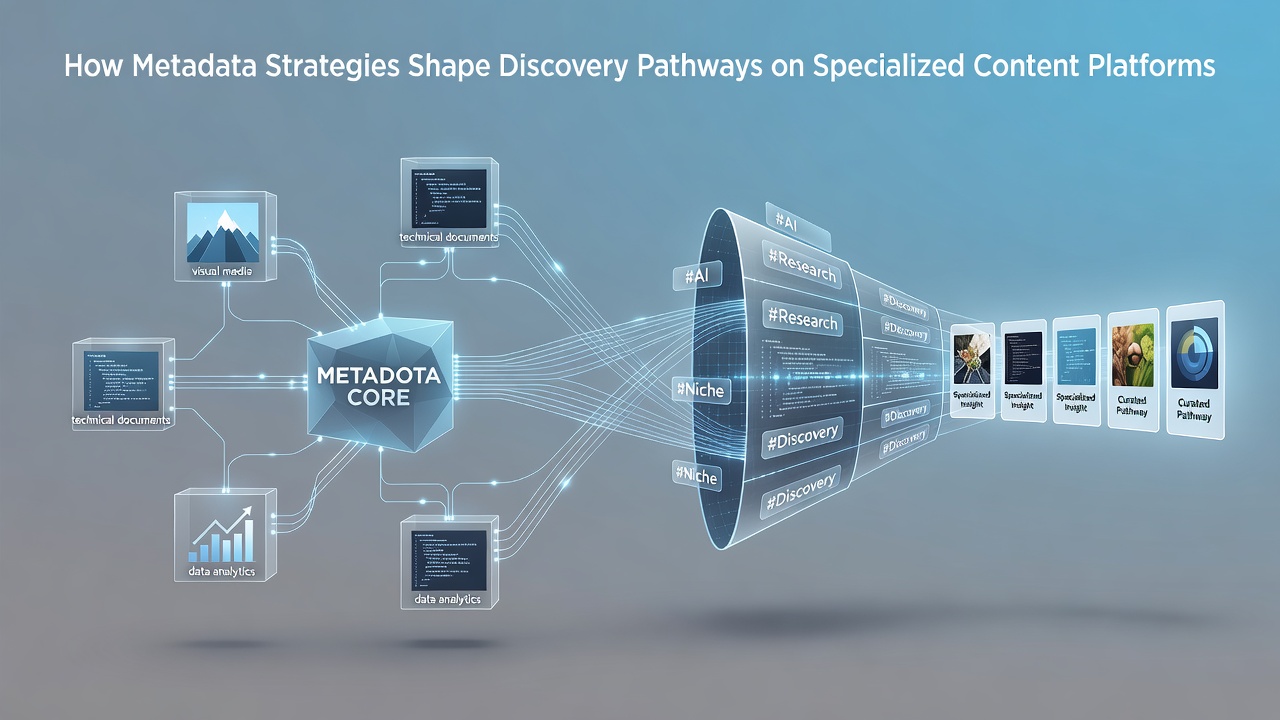
Metadata strategies determine how users locate and engage with content across specialized platforms, and they do so by structuring information in ways that both human searchers and algorithmic systems can interpret consistently. Platforms focused on academic repositories, digital archives, niche media libraries, and professional databases rely on layered metadata frameworks that include descriptive elements such as titles, subjects, and creators alongside technical details like file formats and access rights. These elements combine to create pathways that guide discovery from initial query through to content retrieval, and they operate across multiple content types while remaining invisible to most end users.
Core Components of Metadata Frameworks
Specialized platforms build their discovery systems around standardized schemas that include Dublin Core elements for basic description, schema.org markup for web visibility, and domain-specific vocabularies that capture nuances unique to each field. Researchers have documented how these schemas interact when platforms index new uploads because consistent application of controlled vocabularies reduces duplication and improves cross-referencing between related items. Data from the Library of Congress shows that institutions adopting integrated metadata standards experience measurable increases in retrieval accuracy, particularly when collections span multiple languages or historical periods.
Technical metadata such as resolution, encoding, and provenance records further refines pathways because algorithms use these attributes to filter results according to user device capabilities or preservation requirements. While descriptive metadata drives topical relevance, administrative metadata handles permissions and versioning so that users encounter only accessible and current versions of materials. Observers note that platforms handling scientific datasets or cultural heritage items often layer additional metadata fields to record experimental conditions or artifact provenance, and these additions create narrower but more precise discovery routes.
Algorithmic Influence and User Pathways
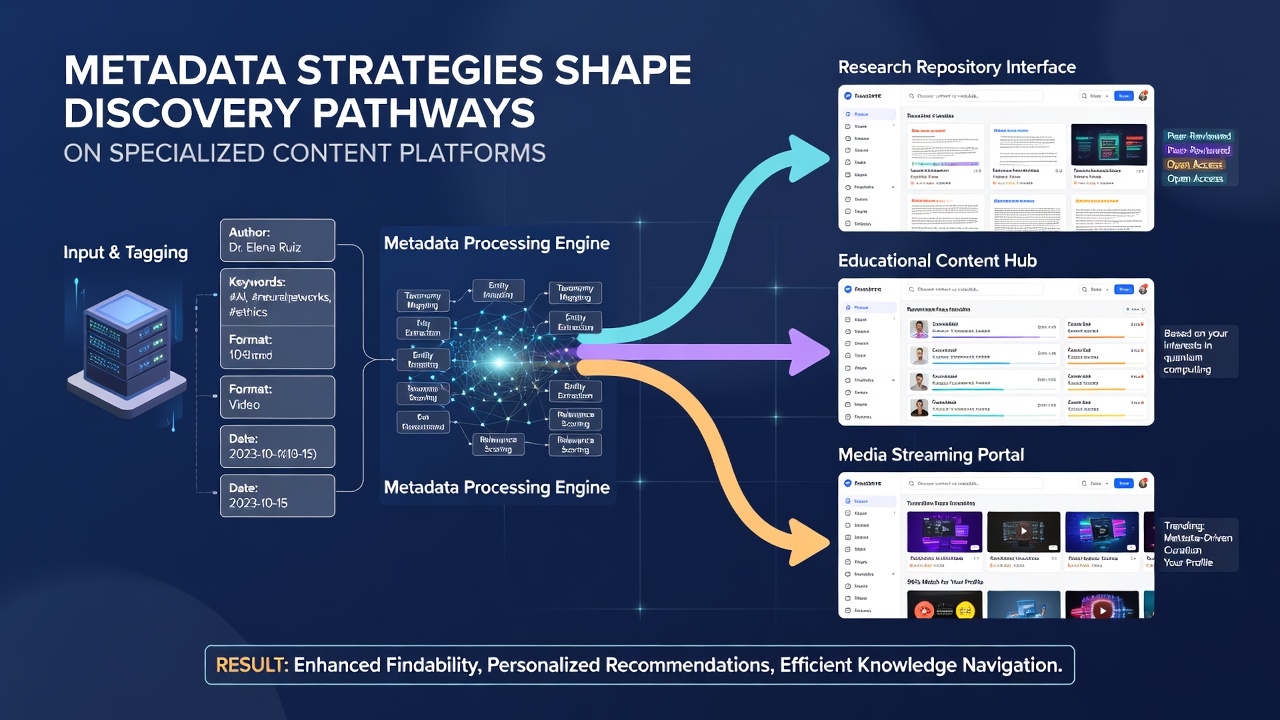
Search and recommendation engines on specialized platforms process metadata as primary signals when ranking results, and they combine term frequency with field weighting to surface items that match query intent more closely than generic keyword approaches allow. Studies from the University of Melbourne indicate that platforms which enrich metadata with relational links between entities, such as connecting authors to institutions or artworks to movements, produce discovery sequences that feel more contextual to users. As of September 2026, several European digital library consortia have expanded entity linking protocols to incorporate temporal relationships, allowing researchers to trace content evolution across decades within a single interface.
Users encounter these strategies through facets, filters, and auto-suggestions that appear during interaction, and each of these interface elements draws directly from structured metadata fields. When a platform exposes geographic or temporal facets, for instance, it does so because administrators have populated corresponding metadata at scale. Platforms that maintain high metadata completeness report stronger engagement metrics because users can refine broad searches without leaving the system, and this reduces bounce rates while increasing time spent within collections.
Challenges in Implementation Across Platforms
Specialized content platforms face ongoing difficulties when scaling metadata strategies because legacy collections often contain incomplete records that require manual review or automated enrichment before they integrate with modern discovery tools. Automated extraction tools using natural language processing have improved coverage rates, yet they still require human validation for fields that carry legal or scholarly weight such as rights statements and subject classifications. Canadian federal digital initiatives have published guidelines that recommend hybrid workflows combining machine assistance with subject expert review, and platforms following these approaches report fewer retrieval errors over time.
Interoperability remains another constraint because platforms serving overlapping user communities must exchange metadata without losing semantic precision. Standards organizations continue to refine crosswalks between schemas, yet differences in granularity between fields can cause information loss during transfer. Those managing multi-institution repositories have found that maintaining a core set of mandatory fields while allowing extension fields for local needs helps preserve both compatibility and specificity.
Future Directions in Metadata-Driven Discovery
Emerging practices incorporate linked data principles and persistent identifiers to create discovery pathways that extend beyond individual platforms, and these approaches allow external systems to reference and surface content dynamically. Persistent identifiers such as DOIs and ARKs function as stable anchors that metadata strategies can leverage when content migrates between repositories or when platforms update internal structures. Research institutions in Australia have begun testing federated discovery environments that query distributed metadata stores in real time, and early results show improved visibility for specialized collections that previously remained siloed.
Platforms also experiment with embedding machine-readable provenance chains within metadata to support verification workflows, particularly in fields where content authenticity carries high stakes. These chains record each transformation or annotation applied to an item, thereby giving users additional context that influences whether they pursue a given resource. Continued investment in metadata quality directly correlates with the effectiveness of these advanced discovery mechanisms.
Conclusion
Metadata strategies function as the underlying architecture that shapes every stage of content discovery on specialized platforms, from initial indexing through user interaction and long-term accessibility. Consistent application of structured schemas, combined with thoughtful enrichment and interoperability measures, determines how effectively users can locate relevant materials amid growing collections. As platforms continue to refine these approaches through September 2026 and beyond, the quality and connectivity of metadata will remain central to the pathways that connect specialized content with its intended audiences.